SunEnergyXT 500 Komplettset – 15 kWh / 800 W / 1.840 Wp – Komplettset
SunEnergyXT 500 Komplettset – 15 kWh / 800 W / 1.840 Wp – Produktansicht 2
SunEnergyXT 500 Komplettset – 15 kWh / 800 W / 1.840 Wp – Produktansicht 3
SunEnergyXT 500 Komplettset – 15 kWh / 800 W / 1.840 Wp – Produktansicht 4
SunEnergyXT 500 Komplettset – 15 kWh / 800 W / 1.840 Wp – Produktansicht 5
SunEnergyXT 500 Komplettset – 15 kWh / 800 W / 1.840 Wp – Produktansicht 6
SunEnergyXT 500 Komplettset – 15 kWh / 800 W / 1.840 Wp – Produktansicht 7

SunEnergyXT 500 complete set – 15 kWh / 800 W / 1,840 Wp – Available for immediate delivery

Regular price 4.577,00 € Sale price3.289,00 € Save 1.288,00 €
/
Tax included. Shipping calculated at checkout.

Manufacturer warranty

Manufacturer's original terms and product information in German.

1 × SunEnergyXT 500

GARAN: SunEnergyXT 500

2 × SunEnergyXT B500

GARAN: SunEnergyXT B500

10 Jahre Haltbarkeitsgarantie des Herstellers SunEnergyXT Holdings S.à r.l., zusätzlich zu Ihren gesetzlichen Gewährleistungsrechten. Mit Kapazitätszusage: mindestens 70 % der Nennenergie bis zu einem Energiedurchsatz des 8.000-Fachen der Nennenergie je Batterieeinheit (entspricht 10.000 Ladezyklen bei 80 % Entladetiefe). Garantiebedingungen: www.sunenergyxt.com/garantie

Garantiebedingungen (PDF)

Abweichend hiervon beträgt die Garantiedauer fünf (5) Jahre, wenn das Produkt im Freien in einer Entfernung von weniger als 5 km (Luftlinie) zur Meeresküste aufgestellt ist oder war.

Garantie und Produktinformationen

Herstellerangaben für die oben genannten Geräte. Die Garantie gilt nicht für weitere Bestandteile eines Sets.

Erweiterung der 500-Serie

Erweiterbar ausschließlich mit dem SunEnergyXT B500, kompatibel mit 500, 500 PRO und 500 PRO AC Core; höchstens 5 Erweiterungsspeicher je Kopfspeicher. Speicher anderer Hersteller werden nicht erkannt.

B500: Erweiterungsspeicher

Der B500 ist ein Erweiterungsspeicher ohne eigenen Wechselrichter, ohne PV-Eingänge und ohne AC-Anschlüsse. Er funktioniert nur zusammen mit einem SunEnergyXT 500, 500 PRO oder 500 PRO AC Core Kopfspeicher.

Energiemessgeräte

Zusätzliche Versorgungsstrategien in der SunEnergyXT App erfordern ein Energiemessgerät aus der Kompatibilitätsliste: www.sunenergyxt.com/komponenten. Andere Messgeräte lassen sich gegebenenfalls über kompatible Smart-Home-Systeme einbinden und die Steuerung erfolgt dann lokal und nicht über die App.

Internetverbindung

Für die Garantie ist keine Internetverbindung erforderlich. Softwareaktualisierungen, Ferndiagnose und App-Funktionen setzen eine Internetverbindung voraus.

Winterbetrieb und Temperatur

Integrierte Heizfunktion: Bei Zelltemperaturen unter 0 °C werden die Batteriezellen automatisch vorgewärmt. Bis zum Erreichen der Betriebstemperatur stehen Lade- und Entladeleistung nur eingeschränkt zur Verfügung; Dauer und Ausmaß hängen unter anderem von Umgebungstemperatur, PV-Leistung und Zahl der Speicher ab. Oberhalb von 45 °C wird die Leistung reduziert.

Softwareaktualisierungen

Für jedes Gerät werden Softwareaktualisierungen, die zum Erhalt der Sicherheit und der in der Bedienungsanleitung beschriebenen Funktionen erforderlich sind, mindestens für die reguläre Dauer der jeweiligen Herstellergarantie bereitgestellt: fünf Jahre für BK215, BK215 PLUS, B215 und B215 PLUS, zehn Jahre für 500, 500 PRO, 500 PRO AC Core und B500. Für den EV3600 werden Softwareaktualisierungen abweichend von seiner zweijährigen Garantiedauer mindestens fünf Jahre bereitgestellt. Diese Zeiträume gelten auch, wenn sich die Garantiedauer wegen einer Aufstellung in Küstennähe nach Artikel 3.1 der jeweiligen Garantieerklärung verkürzt. Beginn und Nachweis des Zeitraums richten sich nach Artikel 3 der jeweiligen Garantieerklärung; bei Weiterverkauf geht der verbleibende Zeitraum auf den Erwerber über.

Der Hersteller kann die Bereitstellung verlängern; eine Verkürzung des einmal angegebenen Zeitraums erfolgt nicht. Vor Erreichen des Endes werden die Nutzer informiert.

Diese Angabe lässt die gesetzlichen Gewährleistungsrechte des Verbrauchers gegenüber seinem Verkäufer, einschließlich der Aktualisierungspflicht bei Waren mit digitalen Elementen, unberührt.

Der Hersteller stellt für die genannten Produkte Softwareaktualisierungen einschließlich Sicherheitsaktualisierungen bereit. Die Auslieferung erfolgt über die Netzwerkverbindung des Geräts; eine bestehende Netzwerkverbindung ist hierfür Voraussetzung. Beim EV3600 und bei Erweiterungsspeichern erfolgt sie über den Kopfspeicher.

Über Softwareaktualisierungen, die den Funktionsumfang oder die Zusammenarbeit mit gelisteten Komponenten verändern, informiert der Hersteller die Nutzer vorab per E-Mail, in der Regel mindestens einen Monat vor Wirksamwerden. Sicherheitsaktualisierungen, die keinen Aufschub zulassen, können kurzfristig bereitgestellt werden; die Nutzer werden dann spätestens mit der Bereitstellung informiert.

Garantiedauer und Aufstellung in Küstennähe

Die Garantiedauer beträgt für alle in Artikel 1.2 genannten Modelle einheitlich zehn (10) Jahre. Sie beginnt mit dem Kaufdatum (Datum der Rechnung des Erstkaufs). Die Garantie ist an das Produkt gebunden und geht bei einem Weiterverkauf innerhalb der Garantiedauer auf den Erwerber über. Für einen nachträglich erworbenen Erweiterungsspeicher B500 läuft die Garantiedauer gesondert ab dessen Kaufdatum. Abweichend hiervon beträgt die Garantiedauer fünf (5) Jahre, wenn das Produkt im Freien in einer Entfernung von weniger als 5 km (Luftlinie) zur Meeresküste aufgestellt ist oder war. Grund ist die erhöhte Korrosionsbelastung durch salzhaltige Luft.

Im Freien aufgestellt ist ein Produkt, das nicht in einem geschlossenen Raum steht, etwa auf einem Balkon, einer Terrasse, einem Dach oder im Garten. Dass das Produkt in diesem Bereich aufgestellt ist oder war, hat der Garantiegeber nachzuweisen.

Kapazitätszusage und Prüfbedingungen

Ergänzend garantiert der Garantiegeber, dass die nutzbare Speicherkapazität des Produkts während der gesamten Garantiedauer nicht unter 70 % der Nennenergie von 5.024 Wh je Batterieeinheit sinkt. Die Kapazitätszusage gilt, bis der kumulierte Energiedurchsatz der Batterieeinheit das 8.000-fache ihrer Nennenergie erreicht hat; das entspricht 10.000 Ladezyklen bei einer Entladetiefe von 80 %, den Referenzbedingungen der im Datenblatt angegebenen Zyklenlebensdauer. Maßgeblich ist der vom Batteriemanagement erfasste Energiedurchsatz, den der Garantiegeber Ihnen auf Anfrage mitteilt. Bei einem Verbund aus Kopfspeicher und Erweiterungsspeichern gilt die Kapazitätszusage für jede Batterieeinheit gesondert.

Nutzbare Speicherkapazität ist die Energiemenge, die der vollständig geladenen Batterieeinheit über den gesamten vom Batteriemanagement freigegebenen Ladezustandsbereich bis zur Abschaltung durch das Batteriemanagement entnommen werden kann; nutzerseitig eingestellte Ladegrenzen bleiben außer Betracht. Sie wird an den Batterieklemmen (gleichstromseitig) oder anhand der vom Batteriemanagement bilanzierten Entladeenergie ermittelt, bei einer Zelltemperatur von 25 °C ± 2 °C und einer konstanten Entladeleistung von 0,2 C (rund 1.000 W je Batterieeinheit). Die Messung führt der Garantiegeber oder ein von ihm autorisierter Servicebetrieb unentgeltlich durch; Sie erhalten ein Messprotokoll. Der vom Batteriemanagement ausgewiesene Kapazitätswert dient der Vorprüfung und ersetzt die Messung nicht.

Die Kapazitätszusage endet mit dem Ablauf der Garantiedauer oder mit Erreichen des vorgenannten Energiedurchsatzes, je nachdem, welches Ereignis früher eintritt. Die Garantiedauer nach Artikel 3 und die Zusage nach Artikel 2.1 bleiben von der Durchsatzgrenze unberührt.

Geltungsbereich

Diese Garantie gilt für Produkte, die in einem der folgenden Staaten erworben und dort betrieben werden: Deutschland, Belgien, Italien, Luxemburg, Niederlande, Österreich, Portugal, Spanien, Frankreich, Griechenland, Rumänien. Wird ein Produkt in einem dieser Staaten erworben und in einem anderen der genannten Staaten betrieben, bleibt die Garantie bestehen.

Gesetzliche Rechte

Diese Herstellergarantie ist freiwillig. Sie tritt neben Ihre gesetzlichen Rechte bei Mängeln und schränkt diese weder ein noch ersetzt sie diese. Ihnen steht gegenüber dem Verkäufer eine gesetzliche Gewährleistung von mindestens zwei Jahren zu. Die Inanspruchnahme dieser gesetzlichen Rechte ist für Sie unentgeltlich.

Reparatur und Ersatzteile

Reparaturen an den in Artikel 1.2 genannten Produkten werden ausschließlich durch den Hersteller oder durch von ihm ausdrücklich autorisierte Servicebetriebe durchgeführt. Eine Reparatur durch den Verbraucher, durch den Händler oder durch nicht autorisierte Dritte ist nicht vorgesehen.

Ersatzteile werden nicht einzeln an Verbraucher, Händler oder Dritte abgegeben. Für die genannten Produkte besteht kein Ersatzteilvertrieb und dementsprechend keine Ersatzteilpreisliste und kein Bestellverfahren für Ersatzteile.

Die Instandsetzung erfolgt ausschließlich im Rahmen des in Artikel 6 beschriebenen Serviceverfahrens. Dabei werden defekte Baugruppen vom Hersteller getauscht oder das Gerät wird gegen ein instandgesetztes oder gleichwertiges Gerät ausgetauscht.

Reparatur- und Wartungsanleitungen für die genannten Produkte werden Verbrauchern, Händlern und unabhängigen Reparaturbetrieben nicht zur Verfügung gestellt.

Verfügbar sind die Bedienungsanleitung, die Installationsanleitung sowie Hinweise zur Fehlerdiagnose und zur Selbsthilfe bei Störungen. Diese stehen unter www.sunenergyxt.com/download-produktdatenblaetter zum Abruf bereit.
American Express Apple Pay Google Pay iDEAL WeroKlarnaMaestroMastercard PayPalShop Pay Union PayUSDC Visa
Beratung

Shipping policy


1. Lieferung

1.1. Balkonkraftwerke

Wir versenden Ihre Balkonkraftwerke und Solarpaneele per Spedition. Ihre Telefonnummer wird zur Terminvereinbarung an die Spedition weitergeleitet. 

Sollten Sie ebenfalls einen Speicher bestellt haben, erfolgt die Lieferung in mehreren separaten Lieferungen, da die Speicher als Gefahrengut gesondert versendet werden.

1.2. Zubehör (Wechselrichter, Kabel, Solarmodulhalterungen) 

Wir versenden Ihr (gesondert bestelltes) Zubehör per DHL, DPD oder UPS. Die Lieferzeit liegt durchschnittlich bei 2-5 Werktagen.

1.3 Lieferung von Balkonkraftwerkspeicher

Balkonkraftwerkspeicher werden stets gesondert per Gefahrenguttransport versendet. Wir nutzen für die Lieferung den Speditionsdienstleister Dachser. Sie erhalten bei Versand Ihre Sendungsnummer zur Sendungsverfolgung. Der Spediteur meldet sich telefonisch vorab bei Ihnen zur Vereinbarung eines Liefertermins. In vereinzelten Fällen erfolgt keine telefonische Vorankündigung, sollte der erste Zustellversuch nicht funktionieren, wir spätestens dann ein Liefertermin vereinbart. Bitte beachten Sie, dass wir keinen Einfluss auf diesen Prozess haben, wir unterstützen Sie jedoch gern jederzeit bei Fragen zu Ihrer Lieferung. 

1.4 Versandorte

Wir versenden innerhalb Deutschland und Österreich. Weitere Länder auf individuelle Vereinbarung. Senden Sie uns dazu bitte Ihre Anfrage an: support@wondervolt.de 
Für Ihre Anfrage benötigen wir folgende Informationen: 

  • Artikel
  • Menge
  • Lieferadresse (inkl. Land und Postleitzahl) 

1.5 Versanddauer

Die Lieferzeit beträgt in der Regel ca. 2-6 Werktage oder wird, wenn abweichend, entsprechend angegeben. Die Bestätigung Ihrer Bestellung erhalten Sie mit unserer Auftragsbestätigung. Sobald Sie diese erhalten habe, gilt unsere Lieferzeit. Ausgenommen sind Vorbestellungen. Vorbestellungen werden innerhalb des angegeben Lieferzeitraums angeliefert.

Bei Verzögerungen informieren wir Sie umgehend.

2. Versandkosten

Der Versand von Balkonkraftwerken, Balkonkraftwerkspeichern und Zubehör innerhalb Deutschlands ist bei uns inklusive, d.h. kostenloser Versand, wenn nicht anders ausgewiesen.

3. Abholung

Sie haben grundsätzlich die Möglichkeit der Abholung bei unserem im Checkout angegebenen Standorten. Wir vereinbaren mit Ihnen einen Abholzeitraum. Sollten Sie den Abholzeitraum nicht einhalten können, kontaktieren Sie uns vorher und vereinbaren einen neuen Abholtermin. Wir behalten uns das Recht vor, Termine abzusagen oder zu verschieben.

Die Abholung erfolgt nur nach Vereinbarung eines Abholtermins. Bitte bringen Sie zur Abholung Ihre Bestellbestätigung und Ihren Lichtbildausweis mit den im Checkout angegebenen Rechnungsdaten mit. Waren sind vorher, spätestens bei Abholung zu bezahlen, wenn nicht anders vereinbart.

Wir übernehmen keine Kosten oder sonstige Verpflichtungen sollten Sie den vereinbarten Lieferzeitraum nicht einhalten können. 

4. Rückversand

Bitte beachten Sie, dass Sie gemäß Ihres Widerrufsrecht die Ware 14 Tage ohne Angabe von Gründen zurückgeben können. Sie tragen die unmittelbaren Kosten der Rücksendung der Waren. Weitere Informationen dazu finden Sie unter Widerruf / Rückgabe.

Sie müssen für einen etwaigen Wertverlust der Waren nur aufkommen, wenn dieser Wertverlust auf einen zur Prüfung der Beschaffenheit, Eigenschaften und Funktionsweise der Waren nicht notwendigen Umgang mit ihnen zurückzuführen ist. Weitere Informationen und Kosten des Rückversands bei Widerruf finden Sie hier:

https://wondervolt.de/policies/refund-policy


Refund policy

Widerrufsbelehrung

Widerrufsrecht

Sie haben das Recht, binnen vierzehn Tagen ohne Angabe von Gründen diesen Vertrag zu widerrufen. Die Widerrufsfrist beträgt vierzehn Tage ab dem Tag, an dem Sie oder ein von Ihnen benannter Dritter, der nicht der Beförderer ist, die Ware bzw. bei Teillieferungen die letzte Ware in Besitz genommen haben bzw. hat.

Um Ihr Widerrufsrecht auszuüben, müssen Sie uns:

Wonderroad International GmbH
c/o WonderVolt
In der Au 25
61440 Oberursel
Deutschland


mittels einer eindeutigen Erklärung (z. B. per Brief oder E-Mail) über Ihren Entschluss, diesen Vertrag zu widerrufen, informieren. Sie können dafür das beigefügte Muster-Widerrufsformular verwenden, das jedoch nicht vorgeschrieben ist.

Zur Wahrung der Widerrufsfrist reicht es aus, dass Sie die Mitteilung über die Ausübung des Widerrufsrechts vor Ablauf der Widerrufsfrist absenden.

Folgen des Widerrufs

Wenn Sie diesen Vertrag widerrufen, erstatten wir Ihnen alle Zahlungen, die wir von Ihnen erhalten haben, einschließlich der Lieferkosten (mit Ausnahme etwaiger Zusatzkosten, die sich aus einer anderen als der von uns angebotenen Standardlieferung ergeben), unverzüglich und spätestens binnen vierzehn Tagen ab dem Tag, an dem Ihre Mitteilung über den Widerruf bei uns eingegangen ist.

Für die Rückzahlung verwenden wir dasselbe Zahlungsmittel, das Sie bei der ursprünglichen Transaktion eingesetzt haben, es sei denn, es wurde ausdrücklich etwas anderes vereinbart. Ihnen entstehen keine Entgelte wegen dieser Rückzahlung.

Wir können die Rückzahlung verweigern, bis wir die Waren wieder zurückerhalten haben oder Sie den Nachweis erbracht haben, dass Sie die Waren zurückgesandt haben.

Rücksendung der Ware

Bitte senden Sie die Ware innerhalb von 14 Tagen nach dem Widerruf an folgende Adresse zurück:

Wonderroad International GmbH
c/o WonderVolt
In der Au 25
61440 Oberursel
Deutschland

Die Frist ist gewahrt, wenn Sie die Ware vor Ablauf der Frist absenden. Die Rücksendekosten sind von Ihnen zu tragen. Versandkosten können nicht erstattet werden. Wenn Sie eine Rückerstattung erhalten, können die Rücksendekosten ggf. von der Erstattung abgezogen werden. Dies ist im Vorhinein schriftlich zu vereinbaren.

Sie haften für einen etwaigen Wertverlust der Ware, wenn dieser auf einen zur Prüfung der Beschaffenheit, Eigenschaften und Funktionsweise der Ware nicht notwendigen Umgang zurückzuführen ist.

Hinweise zur Rücksendung bestimmter Produkte:

  • Balkonkraftwerke: ca. 100 – 150 € Rücksendekosten (abhängig von Standort & Menge). Rückversand nur über unsere Spedition möglich.
  • Batteriespeicher: ca. 80 – 120 € Rücksendekosten (abhängig von Standort & Menge). Rückversand nur über unsere Spedition möglich.
  • Zubehörteile (Wechselrichter, Kabel, Halterungen): ca. 9 – 40 € Rücksendekosten, je nach Versanddienstleister.

Die Preise gelten für den Rückversand innerhalb Deutschlands. Sollten Sie Ihre Waren von außerhalb Deutschlands zurückschicken wollen, fallen ggf. höhere Kosten an. Kontaktieren Sie uns bitte vorher zur Vereinbarung der entsprechenden  Rücksendekonditionen. Wenn Sie sich unsicher sind, wie der Rückversand durchzuführen ist, kontaktieren Sie uns bitte vorher unter: support@wondervolt.de

Ausschluss bzw. vorzeitiges Erlöschen des Widerrufsrechts

Ein Widerrufsrecht besteht nicht bei folgenden Artikeln:

  • Durch Eigenverschulden beschädigte Artikel, die nicht sicher transportiert werden können.
  • Individuell angefertigte, veränderte oder personalisierte Produkte.

Rückerstattungen (sofern zutreffend)

Nach Erhalt und Prüfung Ihrer Rücksendung benachrichtigen wir Sie per E-Mail über den Eingang und den Status Ihrer Rückerstattung. Bei Genehmigung wird die Rückzahlung automatisch über Ihre ursprüngliche Zahlungsmethode eingeleitet.

Verspätete oder fehlende Rückerstattung?

  1. Prüfen Sie zunächst Ihr Bank- oder Kreditkartenkonto.
  2. Kontaktieren Sie ggf. Ihr Kreditkartenunternehmen oder Ihre Bank – es kann etwas Bearbeitungszeit benötigen.
  3. Wenn Sie noch immer keine Rückerstattung erhalten haben, schreiben Sie uns an office@wondervolt.de.

Muster-Widerrufsformular

(Wenn Sie den Vertrag widerrufen möchten, füllen Sie bitte dieses Formular aus und senden es zurück.)

An:
Wonderroad International GmbH
In der Au 25
61440 Oberursel
E-Mail: office@wondervolt.de

Hiermit widerrufe ich den von mir abgeschlossenen Vertrag über den Kauf der folgenden Waren:

Bestellt am: _______________________
Erhalten am: _______________________

Name des Kunden: _______________________
Anschrift des Kunden: _______________________
Rückgabegrund (optional): _______________________

Unterschrift des Kunden (nur bei Mitteilung auf Papier)

Datum: _______________________

Your set at a glance

Full product description and further information

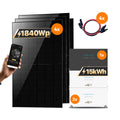
Generate, store, and use solar power flexibly. This complete set combines four high-performance full-black glass-glass modules with the modular SunEnergyXT 500 storage unit. You receive a well-matched foundation for your balcony, patio, garage, or garden.

The four independent MPPT inputs extract the maximum possible yield from each module. Your storage capacity can be easily expanded later by simply attaching additional B500 batteries.

Highlights

  • 1,840 Wp solar power: 4 × 460 Wp OSDA full-black glass-glass modules.
  • 15 kWh storage capacity: Main storage unit plus 2 B500 expansion batteries.
  • 800 W output power: suitable for an uncomplicated start.
  • Flexibly expandable: additional B500 batteries are attached and connected directly.
  • Robust system: IP65, natural cooling, and automatic battery heating at temperatures below 0 °C.
  • Long-lasting: LiFePO4 cells with at least 10,000 cycles under the specified test conditions.

Scope of delivery

  • 1 × SunEnergyXT 500 main storage unit (800 W)
  • 2 × SunEnergyXT B500 expansion battery (5 kWh each)
  • 4 × OSDA 460 Wp full-black glass-glass solar module
  • 4 × solar module connection cable, 1 m
  • 1 × AC power cable, 3 m

Mounting material and installation are not included in the set. Please plan the connection and operation in accordance with local regulations.

Available for immediate delivery.

Free shipping within Germany. Shipping costs apply for deliveries abroad.

SunEnergyXT 500

Store solar energy. Use it later.

The battery, inverter and solar charge controllers are combined in one main unit. Compatible solar panels connect directly to the system, so stored energy can be used when you need it.

The technical information below describes the SunEnergyXT 500 main unit. For this set's total capacity, products and quantities, see the product description above.

5 kWhStorage class per main unit
800 WGrid-connected AC output
PV + ACSystem connection
SunEnergyXT 500
Main-unit illustration, not a picture of the complete set. The set contents are listed in the product description.
Illustrative SunEnergyXT storage tower beside a home with rooftop solar panels
Illustrative system view, not an installation plan. Depicted solar panels and expansion batteries are not automatically included; your selection determines the included items.

Everyday use

Store now, use later

Solar generation and household demand rarely follow the same schedule. Storage holds energy for the hours when you need it. This example shows what to check over the course of a day.

  1. Morning: check the charge

    Check how much energy remains in the battery. Household consumption is a separate measurement, supplied by a compatible energy meter.

  2. Daytime: store energy

    The solar charge controllers use the panels' available generation. Charge level and settings determine how much energy the battery can take in.

  3. Evening: use stored energy

    When solar generation falls, the main unit can supply stored energy within its output limits. Charge level and household demand determine how long it lasts.

  4. Night: keep demand and reserve in view

    The battery can continue supplying energy while charge level and operating settings allow it. A retained backup reserve leaves less energy for ordinary use. Neither nominal capacity nor a sunny afternoon guarantees supply until morning.

Connections and limits

500 and 500 PRO have active direct-PV inputs. Module voltage and current must fit the input limits; total Wp alone does not establish compatibility. AC-coupled retrofit with an existing PV inverter describes AC CORE, not a change to your selected SunEnergyXT 500.

Follow the exact main unit's connection and installation instructions. Demand above its output limit is not covered by storage alone. B500 adds capacity, not inverter power.

This sequence explains the principle, not a yield forecast. Weather, panel orientation, loads, conversion losses, battery state and settings affect the result.

The energy path

From the solar panel to stored energy.

Solar charge controllers, a battery and an inverter work together in the main unit. Each has a different job: process solar input, store energy and provide AC output.

Compatible solar panels

The panels supply DC power to the main unit's active MPPT inputs.

SunEnergyXT 500

SunEnergyXT 500

5,024 Wh nominal energy

Energy for connected loads

The inverter converts stored DC energy to AC. Grid-connected output is rated at 800 W for this model.

Simplified explanation of the storage path, not a wiring diagram. It does not show every operating mode or connection. Installation and backup requirements are separate.

Can PV and AC charge at the same time?

For 500 and 500 PRO, the manufacturer's FAQ gives a combined charging limit of 2,400 W: at 2,000 W from PV, up to 400 W can come from AC. Input capabilities therefore cannot simply be added together to predict battery charging speed. Charge level, temperature and operating settings also affect actual charging.

Manufacturer FAQ ↗ · Checked 21 September 2026. This example is specific to 500 / 500 PRO.

Metering and connection requirements

Measure demand before controlling output

A compatible energy meter reports household consumption or grid flow. The main unit can use these measurements for demand-based control. Battery status alone does not show the home's total consumption; meter compatibility and settings matter.

Match the electrical inputs

The four MPPT inputs have separate voltage and current limits. Panel orientation is only part of the plan: check open-circuit voltage, operating voltage, current and the proposed wiring against the datasheet.

Applications

Start with your solar installation

Are you planning new panels or adding storage to an existing PV system? The connection path matters more than whether the panels sit on a balcony or a roof. These examples explain the options; they do not change your selected SunEnergyXT 500.

Apartment building with solar panels mounted on balconies
Balcony PV example from DRBO Greenenergy. No identified storage unit is shown; this is not an installation plan or a statement of included items.

Connect panels directly

SunEnergyXT 500 and 500 PRO accept compatible solar panels at their active PV inputs. The main unit combines solar charge controllers, battery and inverter. For a new or separate array, this provides a direct route to storage without a separate PV inverter for those panels.

Have module voltage, current and wiring checked against the main unit's limits. Combined Wp alone does not establish compatibility, and the balcony image does not establish a suitable electrical connection.

Solar panels on the roof of a residential building
Existing rooftop PV example from DRBO Greenenergy, not an identified SunEnergyXT retrofit. The installed equipment determines the suitable solution.

Add storage to existing PV

With AC-coupled storage, the existing PV inverter supplies the household AC network. AC CORE takes in energy through its AC connection. The inverter can remain if the connection and control requirements fit the system; compatibility must be checked for the actual installation.

A compatible energy meter provides household measurements for consumption-based control. Its model, measurement point, network connection and firmware belong in the planning. AC storage does not require activation of AC CORE's direct PV inputs.

This retrofit example describes AC CORE, not your selected SunEnergyXT 500. Compare the main units before deciding which connection path to use.

Consider the loads separately

A list of appliances is a useful planning tool, not proof that a storage system can supply them all. Record what runs at the same time and which loads you would want during an outage.

  • Heat pump: use electrical input power, not thermal heating output. Starting current, phases, operating mode and auxiliary heaters need a separate compatibility check.
  • EV charging: a compatible wallbox or EVSE, suitable electrical connection and protection are required; load management may also be needed. Storage output is not the wallbox's charging power.
  • Backup: only suitable loads connected to the main unit's backup output are covered by this function, not automatically the whole home. Check load and starting requirements against its limits. B500 has no separate backup output.
Cutaway illustration of a SunEnergyXT 500-series main unit with battery cells and power electronics
Series main-unit illustration, not an installation diagram or a B500 cutaway. AC CORE's direct PV inputs require separate activation.

SunEnergyXT 500 · Technology

Battery

Lithium iron phosphate battery

The model-specific datasheet specifies LiFePO4 chemistry and 314 Ah nominal battery capacity. The battery stores energy for later use and is rated for at least 10,000 charge/discharge cycles under the conditions below.

Conditions for the cycle-life rating

At least 10,000 cycles at 25 ± 2 °C, 80% depth of discharge, 0.5C charging / 0.5C discharging and 70% remaining capacity at end of life, according to the datasheet. These laboratory conditions do not establish a calendar lifespan or warranty.

Read the technical datasheet

SunEnergyXT 500 · Solar inputs

Four separate solar inputs

4 × MPPT Separate solar inputs
  1. 1PV input
  2. 2PV input
  3. 3PV input
  4. 4PV input
SunEnergyXT 500
SunEnergyXT 500
Simplified input diagram, not a wiring plan. It does not specify port positions or the number of solar panels.

PV limits and compatibility

  • MPPT operating range: 20–60 V.
  • MPPT power according to the datasheet: 4 × 625 W or 3 × 800 W.
  • Maximum input current: 22 A per input; PV short-circuit current: 25 A per input.

Module voltage, current and wiring must suit the inputs. Combined module wattage alone does not establish compatibility.

SunEnergyXT 500 · Protection

Protection and temperature

Integrated aerosol fire suppression

The current manufacturer datasheet lists an integrated automatic aerosol fire-extinguishing system for SunEnergyXT 500.

Continue to follow the placement and safety instructions in the manual. An integrated fire-extinguishing system is not a promise to prevent every fire.

Cooling and temperature

The datasheet specifies natural cooling, IP65 protection and an operating range of −20 °C to +55 °C. For this main unit, output is reduced above 45 °C.

Heating and placement

Automatic battery heating supports operation at low temperatures; the system controls it without user intervention. Allow for its energy use and choose a sheltered, ventilated location with protected connections.

Sources

Source: series datasheet, file version 260914, p. 2

The 500 series compared

Compare the models

Compare connection type, output and storage capacity.

Nominal energy and rated output per device. Current model: SunEnergyXT 500

Swipe sideways to compare all four models

Feature
SunEnergyXT 500
SunEnergyXT 500 Current model
SunEnergyXT 500 PRO
SunEnergyXT 500 PRO
SunEnergyXT 500 PRO AC CORE
SunEnergyXT B500
SunEnergyXT B500
Role in the system Main unit with battery, inverter and active direct-PV inputs. Main unit with battery, inverter and active direct-PV inputs. AC-coupled storage for an existing installation, subject to its connection requirements. Additional battery capacity; requires a compatible main unit.
Nominal energy 5,024 Wh 5,024 Wh 5,024 Wh 5,024 Wh
Grid output (AC) 800 W 2,400 W 2,400 W No separate AC output
Backup output (AC) 2,400 W 2,400 W 2,400 W Via the main unit only
Direct PV connection Four active MPPT inputs Four active MPPT inputs Four inputs, factory-disabled. Separate paid activation required. No PV input

Nominal energy is not usable energy. Grid and backup ratings must not be added together.

Sources

Source: manufacturer technical datasheets for 500 / 500 PRO / B500, pp. 1–3, and AC CORE, p. 1; manual v2.2, PDF p. 7.

Storage sizing

More capacity or more power?

Plan the energy you need over time and the loads running together separately.

kWhStorage capacity

Use more energy later

Compare the energy used after sunset with the surplus available for charging. Choose capacity to match both, not just the number of people in your household.

kWOutput power

Check loads running together

Check the main unit's output against appliances running at the same time. Adding battery capacity does not increase its inverter output.

Adding B500 batteries increases the capacity of SunEnergyXT 500, not its inverter output. Check the permitted combination and available space before choosing additional batteries.

View capacity options

Plan consumption, reserves and usable energy

Start with two quantities: solar energy left after daytime consumption and energy used when generation falls. Household size alone cannot tell you how much storage is useful.

Compare surplus and evening use

Use generation and consumption records from the same periods, including different seasons. Identify how much solar energy remains after immediate household use, then compare it with consumption after sunset. A larger battery cannot make up for missing solar generation.

Separate power from energy

Power in kW describes the load at a given moment. Energy in kWh adds up that demand over time. For a constant load, the calculation is:

1 kW × 1 h = 1 kWh

A constant 1 kW load uses 1 kWh in one hour. This is an energy calculation, not a battery-runtime promise. Usable energy, conversion losses, charge level, reserve and output limits still matter.

Choose capacity and check power

Compare the nominal-energy options in the capacity overview with your consumption records. Do not treat nominal energy as fully usable energy. Any backup reserve leaves less for everyday consumption. Separately, check the main unit's output against appliances running at the same time.

Capacity expansion

Expand storage with B500.

Need more energy for the evening? Add B500 batteries to your main unit as your storage needs grow.

SunEnergyXT B500
B500 expansion battery. Check the product description to see whether B500 batteries are included in this set and, if so, how many.

One main unit can be expanded with up to five B500 batteries. Each B500 adds 5,024 Wh of nominal energy, not inverter power. Follow the manual's combination and installation requirements. The product description above states whether B500 batteries are included in this set and, if so, how many.

Nominal energy per additional B500
+ 5,024 Wh
Main unit output power
Unchanged
View set contents
  1. Main unit5,024 WhNominal energy
  2. + 1 × B50010,048 WhNominal energy
  3. + 2 × B50015,072 WhNominal energy
  4. + 3 × B50020,096 WhNominal energy
  5. + 4 × B50025,120 WhNominal energy
  6. + 5 × B50030,144 WhNominal energy

Each illustration shows one main unit plus the stated number of B500 batteries. Quantity comparison only, not an installation plan or an indication of what is included in your order.

Calculated from 5,024 Wh per main unit and expansion battery. Actual usable energy and runtime depend on operating conditions, reserve settings and conversion losses.

Expanding with main units

One, two or three main units.

B500 adds storage capacity. Additional main units also bring their own inverter.

15 kWh comparison · not your set contents

500 PRO and AC CORE: each rated at 2,400 W AC in grid-connected operation.

All three examples have 15,072 Wh nominal energy, not usable energy.

This is a general model comparison, not the output or contents of your current selection. SunEnergyXT 500 is rated at 800 W grid output; B500 has no AC inverter output of its own.

1 × SunEnergyXT 500 PRO

+ 2 × B50015,072 Wh nominal energy in total

2,400 W

1 × 2,400 W · sum of rated device outputs

One main unit; connection requirements still apply.

2 × SunEnergyXT 500 PRO

+ 1 × B50015,072 Wh nominal energy in total

4,800 W

2 × 2,400 W · sum of rated device outputs

Not automatically usable as a shared 4.8 kW output or a shared backup outlet.

3 × SunEnergyXT 500 PRO

No additional B50015,072 Wh nominal energy in total

7,200 W

3 × 2,400 W · sum of rated device outputs

Not automatically usable as a shared 7.2 kW output or a shared backup outlet.

Quantity illustrations, not a wiring diagram or a packing list. No PV input, usable capacity or backup capability is inferred from these power sums.

Parallel and three-phase control are still announced as forthcoming by the manufacturer. A multi-unit setup needs verification of release, wiring and control requirements. The power sums above are not a promise of a usable shared output.

Connection requirements and manufacturer status
Multi-unit control: check the release status

The manufacturer's 500-series page still lists parallel and three-phase control as forthcoming. The manual already describes a specific off-grid arrangement, but this is not permission for grid-parallel use. The figures shown are sums of individual rated outputs, not a promise of an available or approved combined system output.

An off-grid cable is not a grid connection

Manual section 5.5 describes a separately available 3-to-1 off-grid parallel cable. It is exclusively for island operation; the manufacturer prohibits using it for grid-parallel operation. It is not the standard AC connection cable. Check the actual offer to see whether this accessory is included.

Clarify before ordering

  • Released combination of model, firmware and control system.
  • Electrical connection, phases and protection for the planned installation.
  • Required meter, accessories and services — checked against the actual set contents.

SunEnergyXT App

Energy flows at a glance.

View battery status and energy flows in the SunEnergyXT app and adjust the operating mode to suit the main unit and firmware.

Check the battery

See the charge level and whether energy is being stored or discharged.

Choose the operating mode

Available settings depend on the main unit and its firmware.

Understand household readings

Household readings require a compatible meter at the appropriate measurement point.

Go to the app download page iOS and Android · Manufacturer website

Understand the readings
PV

What reaches the solar inputs?

The PV display concerns the main unit's solar inputs. It is not automatically the output of an existing rooftop inverter. AC CORE needs separate paid activation before its direct PV inputs can be used; B500 has none.

Battery

Charge level and power are different

Charge level describes the battery's state. Charging or discharging power describes the energy flow at that moment. Neither value on its own predicts how long your appliances will run.

Grid & household

Check the measurement point

Grid import, export and household demand are different quantities. A compatible meter and its installation point determine which measurements are available for control. Pair and check the meter using the relevant instructions.

German SunEnergyXT app example labeled 500 PRO, showing PV, meter, grid, load and battery status
German-language 500 PRO example screen. All values are illustrative, not live data or a savings forecast. Available functions depend on the model, firmware and connected meter.

Metering and integration

Control that fits your system.

Compatible energy meter

A compatible meter supplies household measurements for consumption-based control. The app image does not mean a meter is included in your order.

Meter compatibility

Manufacturer-listed energy meters

Shelly 3EM · Shelly Pro 3EM · Shelly EM-50 · EcoTracker IR · EcoTracker P1 · bitShake

This manufacturer list is a starting point for checking compatibility, not a promise for every installation. Confirm the exact meter, interface, firmware and measurement point. “bitShake” names a product family, not a specific model. A meter is not automatically included.

Local integration

Home Assistant integration requires separate setup. Check the supported main unit, firmware and current manufacturer instructions first.

Cloud, local network and updates

Cloud app or local network

According to the manufacturer, full app control uses a cloud connection. An internet connection is recommended for initial setup and is needed for firmware updates. Local control uses the documented mDNS / TCP interface, for example through a separately configured Home Assistant installation; it still requires a working local network and compatible firmware.

Manufacturer Home Assistant guides

Setup and interface details

The manual describes Bluetooth Low Energy-assisted network setup, monitoring and changes to the power-supply mode. The example screen distinguishes PV, meter, grid, load and battery status: these are separate measurement points. Displays vary with connected devices, operating mode and software version.

Meter model, installation point, network connection and firmware must suit the system design.

Source: manufacturer product information and FAQ, checked 21 September 2026; local interface according to the user manual. Manufacturer information ↗

Grid and backup operation

Backup for connected loads

Grid-connected output and island-mode output are different operating specifications. A backup socket is not an automatic supply for every circuit in your home.

Section 6.2 of manual v2.2 describes these three states in UPS mode for suitable loads at the main unit's approved backup connection. PV contributes only through compatible, active direct-PV inputs.

01

Grid available

The manual describes the connected load being supplied by the battery and available PV generation. If these sources cannot supply enough power, the public grid supplements them.

02

Grid outage

The main unit automatically transfers the backup load to battery and available PV supply. Operation remains subject to the charge level, selected mode and load limits; this does not promise uninterrupted operation for every appliance.

03

Grid restored

When the grid returns, the system automatically switches back to grid operation, according to the manual. This sequence concerns the approved backup load, not an automatic transfer of every household circuit.

Grid operation

800 W

This is the rated AC output of SunEnergyXT 500 in grid-connected operation, according to its datasheet. It is not an additional allowance on top of backup output.

Island operation

2,400 W

The datasheet specifies this rated island-mode output for suitable connected loads. The manufacturer's model FAQ gives a shared output limit of 2,400 W for grid and backup use: at 800 W grid output, its example leaves 1,600 W for backup.

Transfer time

For the main units, the datasheets distinguish UPS mode at ≤10 ms from non-UPS mode at less than 2 seconds. These figures describe transfer timing, not how long the battery can supply a load.

Check loads and operating conditions

Check the operating mode and the connected device's tolerance for interruptions. Do not infer suitability for medical, safety-critical or other interruption-sensitive equipment from the switching time alone.

Load requirements

  • Check continuous demand, starting current and all simultaneously connected loads.
  • Allow for battery charge level, operating temperature, settings and conversion losses when assessing runtime.
  • Only suitable loads connected through the approved backup arrangement can be supplied; house wiring is not automatically backed up.

The figures are not additive and are not approval for whole-home backup.

Sources

Sources: main-unit datasheets, pp. 1–2; manual v2.2, section 6.2 / PDF p. 35; the manufacturer's model FAQ for simultaneous grid and backup use.

Read the backup instructions

Before installation

Prepare the installation

Device dimensions are only the starting point. The installation also needs a load-bearing surface, room for connections and service, ventilation and weather protection.

SunEnergyXT 500
Dimensions of the individual device, L × W × H, according to the manufacturer's technical datasheet, p. 2. Not a scale drawing or an installation footprint.
Length
536 mm
Width
379 mm
Height
307 mm

58 ± 1 kg

Net weight per device

Include every additional B500 when assessing the load on the floor and fixings. The manual requires a stable, load-bearing location and vertical installation; horizontal, inverted or tilted placement is not permitted.

Plan access to the power button, status indicators, identification labels and connections. Use the mounting and securing arrangements specified for the actual configuration, not just the footprint shown in a product image.

Check dimensions in the datasheet

Have a qualified electrician check the existing installation, protective measures and connection requirements against the model-specific manual before commissioning.

Shelter and ventilation

The manual requires a shaded location protected from direct sunlight, rain and snow, with sufficient ventilation and access for maintenance. A canopy may be needed. Keep the system away from combustible, explosive or corrosive materials and out of children's reach.

The specified installation altitude is below 2,000 m above sea level.

Installation clearances

The stacking instructions specify more than 23 mm between the main unit and the wall. Their accompanying text specifies at least 88 mm between the expansion batteries and the wall so the main unit can be stacked above them.

These are arrangement-specific distances, not a complete ventilation or cable-clearance plan. Use the full manual for the selected mounting arrangement and keep the cooling surfaces and service access clear.

Connections and earthing

The manual requires external protective earthing and protected unused connectors. It separately identifies the earthing conductor and associated materials as items to be provided on site. Product selection alone does not verify the existing electrical installation.

Have the electrical connection and local requirements checked before commissioning. The product page is not an installation instruction.

Follow the model-specific manual for permitted placement, clearances, connections and electrical installation. A product image does not confirm compatibility with an existing installation.

A backup outlet is not an automatic whole-home supply. Its permitted loads, combined output limits and connection requirements are described in the manual.

Isolate before expansion

The manual allows up to five B500 expansion batteries per main unit. Before changing the configuration, the system must be switched off and disconnected from all inputs and outputs. Switching it off alone is not sufficient when an input can restart it automatically.

Battery expansion is not a hot-swap operation. Follow the manual's sequence and securing requirements for the heavy modules.

These planning notes do not establish compliance for a particular site or market.

Preparation checklist and setup steps

Good preparation keeps system design, placement, electrical connection and software setup distinct. Use this overview to prepare the discussion with a qualified electrical professional, not as wiring instructions.

  1. Agree the system plan

    Bring the exact main-unit model, existing inverter and panel data, consumption records and desired uses. Have the electrical professional assess the connection path, protection and measurement point. Define any backup loads separately rather than assuming the whole home will be supplied.

  2. Check the proposed location

    Record the available space, access route and proposed battery arrangement. Have weight, support, securing hardware, clearances and environmental conditions checked against the manual. Photos and measurements help prepare the assessment; they do not replace it.

  3. Connect according to the manual

    Leave electrical work to the qualified professional, following the instructions for the exact model and configuration. PV, AC, expansion-battery and backup connections have different roles and limits. A product illustration or app setting cannot replace correct wiring and protection.

  4. Set up the app and meter

    After the electrical checks, follow the manual for network and app setup. Coordinate the operating mode with the system plan. If using a compatible meter, check its measurement point, connection and displayed values with the installer; the software settings do not verify the electrical installation.

Request installation advice

System components

Accessories and your selection

Check the components for your planned system.

OSDA 460 Wp Full Black ODA460-24V-MHDBRz

Solar panels

Modules supply DC energy.

Details

A module's Wp rating describes nominal solar-module power, not the storage system's AC output. Check the exact module's voltage and current, the intended wiring and the active PV inputs before choosing a quantity.

Example of a solar-panel mounting bracket

Panel mounts

A mount must suit the panel frame and the actual mounting surface or railing.

Details

Round and square railing profiles are different selections. Check dimensions, fasteners, load-bearing capacity and the mounting instructions; a selectable bracket is not automatically approved for every panel or balcony.

Panel mounts are not the mounting hardware used to secure the storage units.

SunEnergyXT B500

B500

The expansion battery adds 5,024 Wh of nominal energy per unit.

Details

A main unit supports up to five B500 batteries according to the manual. Plan the total weight, stacking arrangement and securing hardware as well as the desired capacity.

Red and black DC cable pair

DC cables and AC connection

A DC cable pair extends the solar connection; it is not an AC mains cable or a battery expansion connection.

Details

Choose the required length and verify conductor size, electrical ratings, connector compatibility and routing for the actual installation.

The required AC connection must be assessed separately. A cable shown in a picture or listed in a generic manual does not confirm the contents of the selected merchant offer.

EcoTracker IR

Energy meter

A compatible meter supplies consumption or grid measurements for demand-based control.

Details

The manufacturer currently lists EcoTracker IR, among other devices; support still depends on the exact meter, installation point, firmware and configuration.

The manual lists the meter as separately available. An energy meter is not automatically a regulated German smart metering system, or iMSys, and it does not add battery capacity or output power.

Contents of this set

SunEnergyXT 500 complete set – 15 kWh / 800 W / 1,840 Wp – Available for immediate delivery

The product description lists the components and quantities for this set. If different set variants are available, check the description for the selected variant.

Read the complete product description

Planning your installation

Check what is already included before adding batteries, panels, mounts, cables or a meter. The component illustrations explain their functions; they are not this set's packing list.

A suitable installation location and electrical connection are required; any further components depend on your installation. Check the product description for any installation services or activation services offered with this set.

Each accessory's current product data and installation instructions remain decisive for compatibility and delivery contents.

Sources

Sources: manual v2.2, PDF pp. 7, 12, 16–17, 24, 28 and 35; manufacturer's energy-meter list.

SunEnergyXT 500

Technical data and documents.

The storage class is not the same as usable energy. See the model-specific datasheet for detailed electrical values and operating conditions.

Manufacturer's model information
Battery and capacity
Model
SunEnergyXT 500
Product type
Hybrid storage main unit
Storage class
5 kWh
Nominal energy per unit
5,024 Wh
Battery chemistry
LiFePO4
Nominal battery capacity
314 Ah
Nominal battery charging / discharging power (DC)
2,400 / 2,600 W
Capacity expansion
B500
AC charging and output
Grid-connected AC output
800 W
Nominal AC output voltage
230 V
AC output frequency
50 / 60 Hz
Maximum AC charging apparent power
2,400 VA
Maximum AC charging current
12 A
Rated island output, separately connected loads
2,400 W
Transfer: UPS / non-UPS mode
≤ 10 ms / < 2 s
PV connection
Direct PV connection
Via the main unit's MPPT inputs
PV inputs
4
MPPT operating voltage
20–60 V
MPPT power according to datasheet
4 × 625 W or 3 × 800 W
Maximum current per PV input
22 A
PV short-circuit current per input
25 A
Dimensions and operating conditions
Cooling
Natural cooling
Enclosure protection
IP65
Operating temperature
−20–55 °C; derating above 45 °C
Maximum installation altitude
Below 2,000 m above sea level
Dimensions per datasheet (L × W × H)
536 × 379 × 307 mm
Net weight per datasheet
58 ± 1 kg

Source: model-specific manufacturer datasheet. DC battery ratings, AC charging, grid output and island output describe different operating paths and must not be added together. Transfer time is not a runtime guarantee or approval for whole-home backup. IP65 does not remove the installation, ventilation and weather-protection requirements.

Connections and status indicators

The battery stores DC energy; the inverter connects it to the AC side. Solar input, battery charging and output ratings describe different parts of this process.

Connection functions

Illustration of a SunEnergyXT 500-series main unit showing the connection side and cooling fins
Series illustration from DRBO Greenenergy, not a wiring diagram.
AC grid connection
Connects the main unit to the grid-connected AC installation.
AC island connection
Separate output for suitable connected loads in backup operation.
PV and battery interfaces
Solar inputs and battery expansion interfaces are separate connections with different functions.
Protective earth and parallel port
Use only as described in the manual. The off-grid parallel cable is not permitted for grid-parallel operation.

Functional description, not a wiring diagram. Port positions and connection procedures: manual v2.2, PDF pp. 13, 15, 19 and 28–33.

What do the status lights mean?

The main unit distinguishes PV, GRID, BACKUP, Wi-Fi, BLE, STATE and BATTERY. According to the manual, yellow at STATE indicates heating, blue indicates maintenance — state-of-charge calibration required — and red indicates a fault.

The main-unit datasheet also lists anti-islanding protection. This is separate from backup operation and is not a feature of a standalone B500.

Use the full indicator and flashing-pattern table before interpreting a signal. A colour alone does not diagnose the cause of a fault; follow the manual's troubleshooting and safety guidance.

Indicator reference in manual v2.2 ↗

Sources

Sources: model-specific datasheet, including its cycle-life footnote; manual v2.2, PDF pp. 7, 14–19, 33 and 35–37.

Maintenance and storage

Plan for periods without use

The datasheet recommends a charge/discharge cycle every three months and requires one after six months at the latest. If the system will stand unused, include this in your maintenance plan rather than treating it as maintenance-free.

Storage is not operation

The datasheet specifies −20 °C to +45 °C for one month of storage and 0 °C to +35 °C for long-term storage. These are storage conditions, not permission to operate or charge in any environment.

The manual requires a clean, dry environment without condensation. Follow its handling, connection and commissioning instructions when returning the system to use.

Sources

Sources: model-specific datasheet, including storage and maintenance rows; manual v2.2, PDF pp. 17–19, 23–24, 28–29 and 34–35.

Before you order

Frequently asked questions.

Can I combine this with BK215 or BK215 Plus?

The manufacturer describes software coordination of 500, 500 PRO or AC CORE with BK215 / BK215 Plus through its cloud strategy or a separately configured Home Assistant installation. A direct physical cable connection between these systems is not supported. This is not a B500 battery connection. Check the exact devices, firmware and control setup before planning a combined system.

Source: manufacturer product FAQ, checked 21 September 2026. View source ↗

How much battery capacity do I need?

Look at the energy you use after solar generation falls, not only your annual consumption. Compare this with the surplus available for charging. A larger battery does not create more solar energy. One main unit starts with 5,024 Wh nominal energy; B500 batteries add the same nominal energy per unit.

Can I keep my existing solar inverter?

AC CORE is designed for adding storage on the AC side of an existing system. The existing solar inverter can remain in use, provided the installation, metering and connection plan are suitable. Send us its exact model and your planned setup before ordering if you are unsure.

Can I choose solar panels by total wattage alone?

No. Open-circuit voltage, operating voltage, current and the connection arrangement must match the exact input limits. The Wp rating alone does not establish compatibility. AC CORE's direct PV inputs are not enabled in its base configuration.

Is an energy meter included automatically?

No. It is a separate product unless your selected item's delivery contents explicitly include it. For demand-based control, check compatibility with both the storage system and your household meter, as well as firmware and installation requirements.

How do 500, 500 PRO and AC CORE differ?

The 500 has 800 W grid-connected output; 500 PRO and AC CORE have 2,400 W. 500 and 500 PRO provide active direct-PV inputs. AC CORE is intended for AC-coupled storage; its direct-PV controllers require separate paid activation. Connection and installation requirements still apply.

Does adding a B500 increase output power?

No. B500 adds storage capacity. The main unit determines the inverter output; additional batteries do not increase that rating.

Are all pictured accessories included?

System illustrations explain how components work together; they do not define this set's contents. See the product description for the components, quantities and services offered with the selected set variant.

Can I use a standard socket without checking the installation?

Do not assume that every existing socket or circuit is suitable. Follow the exact model's installation instructions and have the electrical connection and local requirements checked before commissioning.

Does “15 B500” mean 15 batteries on one main unit?

No. The manufacturer's multi-main illustration distributes up to 15 expansion batteries across three main units: up to five B500 per main unit. It does not increase the limit for one tower. This is a planning illustration, not a packing list or release confirmation for a coordinated system.

Control guides & documents

Check the model, firmware and document version before setup. An API document does not confirm coordinated multi-unit control.

Need technical help?

For questions about your order, contact Wondervolt. The manufacturer also provides a technical ticket form and repair-status lookup. These links do not change your rights against the seller.